The Basic Process
From EPA Office of Compliance Sector Notebook Project, Profile of the Oil and Gas Extraction Industry, page 15
The oil and gas extraction industry can be classified into four major processes:
(1) exploration,
(2) well development,
(3) production, and
(4) site abandonment.
Exploration involves the search for rock formations associated with oil or natural gas deposits, and involves geophysical prospecting and/or exploratory drilling.
Well development occurs after exploration has located an economically recoverable field, and involves the construction of one or more wells from the beginning (called spudding) to either abandonment if no hydrocarbons are found, or to well completion if hydrocarbons are found in sufficient quantities
Production is the process of extracting the hydrocarbons and separating the mixture of liquid hydrocarbons, gas, water, and solids, removing the constituents that are non-saleable, and selling the liquid hydrocarbons and gas. Production sites often handle crude oil from more than one well. Oil is nearly always processed at a refinery; natural gas may be processed to remove impurities either in the field or at a natural gas processing plant.
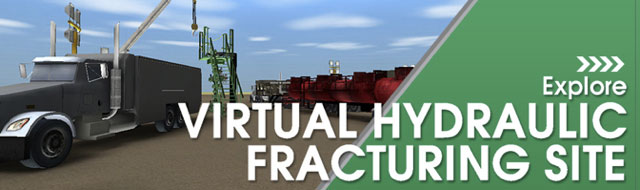
View the Featured Video on Energy In Depth to learm more about the oil and gas development process.
Finally, site abandonment involves plugging the well(s) and restoring the site when a recently-drilled well lacks the potential to produce economic quantities of oil or gas, or when a production well is no longer economically viable.
Advanced Drilling Technologies
Traditionally oil and gas wells are vertically drilled. Technological advancements have allowed operators to save time, reduce operational costs, and lessen their environmental impact. New drilling technologies include the following techniques:
Drilling Methods
Horizontal Drilling
Increase Productivity / Decrease Cost
In one study, horizontally drilled Canadian wells produced as much as 4.1 times the product when compared with vertically drilled wells. The cost for building horizontally drilled wells was only 2.1 times vertically drilled wells.
Horizontal drilling starts with a vertical well that turns horizontal within the reservoir rock in order to expose more open hole to the reservoir. These horizontal “legs” can be over a mile long; the longer the exposure length, the more oil and natural gas is drained and the faster it can flow. Horizontal wells are attractive because they (1) can be used in situations where conventional drilling is impossible or cost effective,(2) reduce surface disturbance by requiring less wells to reach the reservoir, and (3) can produce as much as 15 to 20 times as much oil and gas compared to a vertical well.
Multilateral Drilling
Sometimes oil and natural gas reserves are located in separate layers underground. Multilateral drilling allows operators to branch out from the main well to tap reserves at different depths. This dramatically increases production from a single well and reduces the number of wells drilled on the surface.
Extended Reach Drilling
Extended reach drills allow producers to reach deposits that are great distances away from the drilling rig. This can help producers tap oil and natural gas deposits under surface areas where a vertical well cannot be drilled, such as under developed or environmentally sensitive areas. Wells can now reach out over 5 miles from the surface location and, dozens of wells can be drilled from a single location, reducing surface impacts.
Complex Path Drilling
Complex well paths can have multiple twists and turns to try to hit multiple accumulations from a single well location. Using this technology can be more cost effective and produce less waste and surface impacts than drilling multiple wells.
Benefits of Directional (Advanced) Drilling Technologies:
- Improve oil production and increase reserves
- Intersecting natural fractures that cannot be accessed with vertical wells
- Delaying the onset of gas or water coning (a term used to describe the mechanism underlying the upward movement of water and/or the downward movement of gas into the perforations of a producing well) so that more oil is produced.
- Improving production from thin or tight reservoirs
- For reservoirs injected with fluids to increase oil or gas production, improving waterflood “sweep efficiency” or the ability to force more oil out of the reservoir after initial extraction.
Unconventional Natural Gas
See our Coalbed Methane page for a detailed description on this unconventional gas technology and the BMPs that help to regulate it.
Unconventional oil resources are produced by methods other than the traditional oil well. These resources include oil sands, tar sands, heavy oil, and oil shale, but are beyond the scope of this website. Unconventional natural gas development is characterized by unique geologic attributes that make the reservoirs more challenging to produce. The formations are generally tighter or have a lower permeability and include tight gas, shale gas, hydrates,and coalbed methane.
|
Improving the Process
A variety of new technologies and practices can be implemented to minimize the environmental footprint of development. In the following sections and links, we spotlight some examples in the Intermountain West.
Consolidating Facilities
Development of each well requires certain basic processes, facilities, equipment, and personnel. That said, innovators have realized that, at least in some situations, the overall environmental footprint in a field can be reduced by consolidating some of these. Examples of consolidation include:
- Multiple wells: Drilling from a few to a few dozen wells from a single pad
- Corridors: Roads, pipes, and transmission lines sited in common corridors
- Staging/Storage: Remotely storing materials and/or staging development activities,including fracing and other well completions
Some of the benefits and drawbacks of consolidation practices include:
| Consolidation |
Benefits |
Drawbacks |
| Multiple well pads |
Requires less roads and infrastructure, leading to a smaller disturbance per well and reduced overall production footprint
Can eliminate disturbance in particularly sensitive areas
Reduced drilling and completion time, which reduces rig rental costs
Reduced need for service crews, decreasing traffic (and associated emissions) and operating costs
Increased efficiency of hydrocarbon recovery from the chosen reservoir |
Higher concentration of surface disturbance and waste generation
Batch processing of multi-well pads requires that all wells on the pad be drilled and completed before the results of the first well are known, delaying the start of production |
| Common Corridors |
Reduces landscape fragmentation
Concentrates disturbance |
Concentrates disturbance |
| Centralized Staging/Storage |
Reduces truck traffic, which reduces wildlife harassment, air emissions, and road damage
Reduces number of storage tanks needed per well site, reducing well pad size requirements
Facilitates reuse of materials; reduction; reduction in fresh water usage |
Increases concentration of waste generation |
| Consolidated Production Facilities |
Reduces truck traffic which reduces:
- Wildlife harassment
- Air emissions
- Road damage
Reduces number of storage tanks needed per well site, reducing well pad size requirements
Facilitates reuse of materials; reduction in fresh water usage |
Surface disturbance concentrated to smaller area |
Multiple-well drill pads: New methods of drilling allow smaller surface pads to reach a greater exploratory acreage beneath the surface. Multi-well drilling pads utilize advanced drilling techniques for access to multiple locations in a reservoir. Potentially, several subterranean sources can be contacted from the same pad.
Common Corridors: All utilities such as water, electricity, oil, and gas can follow common paths. Utility lines and product pipelines can also be sited either adjacent to roadways or underneath them, eliminating multiple, manmade pathways leading to a drill site. This lessens the need for the construction of multiple infrastructure pathways.
Centralized Staging and Storage: Both production materials and production products can be stored in centralized field storage facilities. Storage tanks can be housed in an area that is within a close proximity to the well site. Oil from all well sites can be placed in this centralized location rather than be stored on the well pads. Tankers will not need to make a pick-up at each well site. Less traffic can mean fewer emissions, reduced impact on wildlife, neighbors and road infrastructure, and may allow for construction of a lower volume roadway. Centralized staging areas for development processes can have these same benefits and reduce cost and materials of development.
Consolidated Facilities Spotlights
Water Use
The Anadarko Completion Transport System (ACTS) moves large volumes of water without trucking, reducing freshwater usage, truck traffic, air emissions, and costs in the Uinta Basin
Landscape Disturbance
Anadarko’s Quad separator located in a single enclosed building
Antero’s Piceance Basin operations employ multi-well pads and common corridor BMPs
The Bill Barrett Corporation employs multi-well pad drilling and centralized tank batteries in the West Tavaputs Plateau
BP’s Wamsutter operations employ multi-well pad drilling and centralized production and storage facilities
Encana’s Natural Gas Factory in the Piceance Basin employs a “fit-for-purpose” rig to drill 52 wells on a single pad
ExxonMobil signed a voluntary Wildlife Mitigation Plan (WMP) for operations in Rio Blanco County, Colorado, that includes a target of 22 wells per pad
Questar implemented Liquid Gathering Systems and multi-well pads for its operations in the Pinedale Anticline
Williams E&P designed a rig that can drill and complete 22 natural gas wells on a single pad in the Piceance Basin
|
EPA Office of Compliance Sector Notebook Project, Profile of the Oil and Gas Extraction Industry (see Chapter III)
EPA’s Sector Notebook Project on Oil and Gas Extraction provides summary information of environmental issues associated with the oil and gas sector to help facilitate multi-statute solutions to facility permitting, compliance assurance, education/outreach, research, and regulatory development issues. The document includes general industry information (economic and geographic), a description of industrial processes, pollution outputs, pollution prevention opportunities, federal statutory and regulatory framework, compliance history, and a description of partnerships that have been formed between regulatory agencies, the regulated community and the public.
Overview of the Oil and Gas Exploration and Production Process
This article provides a brief introduction to the "upstream" side of oil and gas, including exploration, appraisal, development, production, decommissioning and rehabilitation.
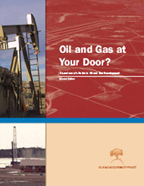 Oil and Gas at Your Door: A Landowner's Guide to Oil and Gas Development Oil and Gas at Your Door: A Landowner's Guide to Oil and Gas Development
This guide contains a description of the oil and gas development process, legal and government regulatory information, tips on how to deal with the oil and gas industry, stories from landowners who have already experienced development on or near their property, and lists of additional resources that may help to further prepare landowners for oil and gas development. The guide highlights issues specific to private as opposed to public lands.
Environmentally Friendly Drilling Program (EFD)
The EFD program operates to integrate advanced technologies into systems that significantly reduce the impact of drilling and production. See EFD's Best Practices web page for more information about the BMP database.
Montana Board of Oil and Gas – Coalbed Methane Information
This website contains many resources on coalbed methane, including use of produced water, Montana’s BMP handbook, and general BMP information.
|
Bureau of Land Management Oil and Gas Program
The BLM’s website includes information on leasing, permitting, developing and operating oil and gas resources.
Bureau of Land Management’s BMP Web page provides both general and technical information on BMPs, including links to the Gold Book, BMP Awards, and information on split estates.
Environmental, Health, and Safety Guidelines for Onshore Oil and Gas Development, International Finance Corporation (World Bank Group)
This source includes technical reference documents with general and industry-specific examples of Good International Industry Practice (GIIP). Included is information relevant to seismic exploration; exploration and production drilling; development and production activities; transportation activities including pipelines; other facilities including pump stations, metering stations, pigging stations, compressor stations and storage facilities; ancillary and support operations; and decommissioning.
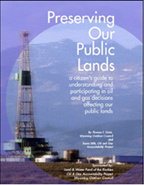 Preserving Our Public Lands (2002) Preserving Our Public Lands (2002)
This guide is intended to help grassroots organizations, the general public and concerned citizens to understand and participate in oil and gas decisions affecting our public lands (2002 version.) A 2008 update, Fuel for Thought, focuses on influencing BLM decisionmaking.
Energy In Depth is a website project of independent oil and natural gas producers of the U.S. The website was created to tell the real story of the people responsible for producing energy in America. Energy In Depth gives visitors a virtual, first-hand look at the production process: unvarnished, up close, and yes: in depth. The website includes easy to understand descriptions of the development process as well as commentary on controversial development issues.
 Red Lodge Clearinghouse website explains local, state and federal oil and gas laws and regulations as well as key concepts of the oil and gas development processes such as Split Estates, Leasable Minerals, Good Neighbor Agreements, Best Management Practices, and more. Additionally, specific state laws pertaining to oil and gas development are discussed with examples of local controversies. Red Lodge Clearinghouse website explains local, state and federal oil and gas laws and regulations as well as key concepts of the oil and gas development processes such as Split Estates, Leasable Minerals, Good Neighbor Agreements, Best Management Practices, and more. Additionally, specific state laws pertaining to oil and gas development are discussed with examples of local controversies.
|