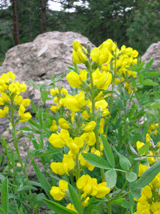
Native Vegetation and Rare Plant Resources
"Negative impacts to biodiversity [resulting from oil and gas development] may mean habitat conversion, degradation and fragmentation; air, water and soil pollution; deforestation; soil erosion and sedimentation of waterways; soil compaction; contamination from improper waste disposal or oil spills; and loss of productive capacity and degradation of ecosystem functions."
Center for Plant Conservation
 This resource page focuses on the impacts oil and gas development has on native vegetation and rare plants. Through it, we hope to bring awareness to a commonly overlooked component of our natural heritage and crucial element of wildlife habitats -- plants. This resource page focuses on the impacts oil and gas development has on native vegetation and rare plants. Through it, we hope to bring awareness to a commonly overlooked component of our natural heritage and crucial element of wildlife habitats -- plants.
Native vegetation and rare plants support wildlife, the environment, and people. Destruction of native vegetation (by a variety of activities), invasion by foreign plants and animals, over collection, and other environmental damage are eroding our natural plant communities.
Plants and Our Ecosystem
"Native plants are in balance with the ecosystem, provide cover and food for native animals, and have developed a surprisingly diverse array of relationships with soil fungi and other native microorganisms."
Native Plant Society of New Mexico
Plants perform irreplaceable functions in natural communities. Photosynthesis by land plants and algae is the ultimate source of energy and organic material in nearly all ecosystems. Plants are the primary producers in most terrestrial ecosystems and form the basis of the food web in those ecosystems. Native plants are especially important to natural communities because they have evolved over time to adapt to the specific climate and habitat of the region. Humans also utilize many resources provided by plants including, food, wood, cloth, and medicines, and use plants for recreational, cultural, and aesthetic purposes.
Plants Gifts' To Ecosystems |
| Environment |
Humans |
Wildlife |
| clean air |
food |
habitat |
| clean water |
fibers |
shelter |
| erosion control |
fuel |
food |
| wind moderation |
pharmaceuticals |
protection |
| water impact moderation |
shelter |
|
| shade |
ornamentals |
|
| |
fragrance |
|
Hidden in Plain Sight
http://www.natureserve.org/publications/hidden_in_plain_sight.pdf
http://www.natureserve.org/publications/hidden_plain_sight.jsp
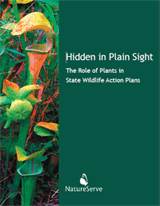 NatureServe is a non-profit organization dedicated to providing the scientific basis for effective conservation. Their report, Hidden in Plain Sight: The Role of Plants in State Wildlife Action Plans, looks at how states assess plants in their consideration of conservation strategies. They found that because the federal guidelines governing the development of these plans specifically excludes plants from the definition of "wildlife," native plant species, even those listed threatened or endangered, are poorly protected in conservation efforts. In fact, "plants represent more than half (56%) of species federally listed as threatened or endangered." However, "in 1997 recovery spending on plants was just 4% of total expenditures." NatureServe emphasizes this discrepancy as worrisome because of the positive correlation between funding and species’ overall status and recovery prospects. NatureServe is a non-profit organization dedicated to providing the scientific basis for effective conservation. Their report, Hidden in Plain Sight: The Role of Plants in State Wildlife Action Plans, looks at how states assess plants in their consideration of conservation strategies. They found that because the federal guidelines governing the development of these plans specifically excludes plants from the definition of "wildlife," native plant species, even those listed threatened or endangered, are poorly protected in conservation efforts. In fact, "plants represent more than half (56%) of species federally listed as threatened or endangered." However, "in 1997 recovery spending on plants was just 4% of total expenditures." NatureServe emphasizes this discrepancy as worrisome because of the positive correlation between funding and species’ overall status and recovery prospects.
The report stresses the need to invest in the conservation of species while they are still abundant. NatureServe acknowledges that investing early is far more cost effective than carrying out heroic and expensive measures to resurrect them once they have become threatened or endangered. The highly localized nature of many rare plants, residing in a specific micro-climate, makes
avoidance in conservation efforts of paramount importance. Furthermore, the article addresses the ecological resilience that comes with species diversity, strengthening the argument for preemptive protection.
How Does Oil and Gas Development Affect Native Species?
| Oil and Gas Development Can Negatively Affect Plant Species |
| Development Process |
Source of Impact |
Impacts to Plants |
| Drilling and Completion |
Muds and cuttings, which may contain chemical additives, salts, metals and hydrocarbons, are often stored in pits and buried on site. This may sterilize soils. |
Soil Sterilization |
| Stimulation |
Many fracturing chemicals are hazardous, and may contaminate soil if spilled on site. |
Contaminated soil |
| Produced Water/Fluids |
Salts, metals, hydrocarbons or traces of chemical additives in produced water may contaminate soil if spilled on the surface or stored in earthen pits.
Produced water can also be toxic to plants at high concentrations. |
Contaminated soil
Contaminated water
Direct harm to plants
|
| Separation and Dehydration |
Pits or tanks that store wastewater may leak or overflow and contaminate soil. |
Contaminated soil |
| Gas Compression |
Soil and water pollution may occur due to spills or leaks of diesel or other fuel used to power the compressors. |
Contaminated soil
Contaminated water |
| Access Roads |
Roads compact soils and can introduce non-native plant species.
Roads also provide access to remote areas for ORVs. |
Direct loss of plant habitat
Direct harm to plants
Introduction of competitive non-natives
Prevent new plant growth |
| Construction/Siting |
Well pad construction converts plant habitat and causes soil compaction. |
Direct loss of habitat
Direct harm to plants
Habitat conversion
Habitat fragmentation |
For additional information on the impacts of oil and gas development on plants see below.
Exotic Invasion
Interrelated Causes of Plant Invasions (This link allows purchase of the publication.)
This article, by Dana Blumenthal, published in Science / AAAS looks at the role human surface disturbing activities, such as oil and gas development, have on plant communities. Blumenthal presents a hypothesis for the cause of invasion by exotic species and its connection to human activity. The article looks at plant communities with significant disturbance, high resource availability, or reduced species diversity. These conditions result in the tendency for native plant communities to be easily colonized.
Preventing and Mitigating Primary and Secondary Biodiversity Impacts
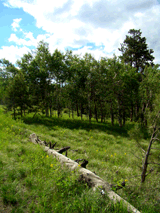
To limit the long-term impacts of essential oil and gas development on plant communities and sensitive species, industry can:
• Avoid disturbance in particularly sensitive or important plant communities;
• Minimize disturbance wherever possible (e.g., using smaller well pads, fewer roads, or preventing the introduction/spread of weeds); and
• Reclaim areas after disturbance.
The materials on this Rare Plants and Native Vegetation Resource page and the BMP database are intended to help stakeholders understand the impacts to native plant communities and sensitive species and to help develop strategies to avoid or minimize those impacts. The Reclamation Resources page provides information to help restore areas when disturbance is unavoidable, but recognizing the importance of native plant communities and avoiding impacts during development should always be the preferred alternative.
A few resources to help minimize and mitigate the impacts of development on plant communities include:
The Energy & Biodiversity Initiative
The Energy and Biodiversity Initiative (EBI) operated as a partnership of industry and conservation groups from 2001 – 2007. The EBI defined primary and secondary development impacts of oil and gas development to the environment and took an in-depth look at identifying and minimizing them.
Low Impact Access Roads Research
In gas and oil drilling sites, conventional roads may disturb a few to over a hundred acres depending on the drilling site. Conventional construction of roads:
• Disturbs natural watersheds.
• Removes vegetation coverage.
• Changes the topography and soil structure
• Removes natural habitat for wildlife.
• Provides a barrier to movement and spread of plants and animals.
• Affects animal behavior.
• Provides further access to sensitive areas off the main highway.
• Creates a visual disturbance to the landscape.
The Low Impact Access Roads Research, funded by the Environmentally Friendly Drilling Program (EFD), seeks innovative ways to reduce these negative impacts, by challenging students to design beyond the conventional.
Management of Noxious Weeds
Nonchemical Management of Noxious Weeds: Lessons from Leafy Spurge and Yellow Starthistle by Caroline Cox from the Tilth Producers Quarterly: A Journal of Organic and Sustainable Agriculture.
Growing Soil
Native Plants Alliance
By: Peter McRae, Mir-M. Seyedbagheri, John Steinbacher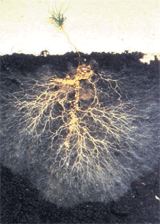 "Growing Soil: Establishing Sustainable Native Plant Growth on Drastically Disturbed Soil in Harsh Environments" looks at the need for in successful reclamation projects in disturbed soils in harsh environments. The strategy recognizes that the key to establishing native plant growth is to re-build sterile soils into vibrant organic matter, rich in living organisms. "Growing Soil: Establishing Sustainable Native Plant Growth on Drastically Disturbed Soil in Harsh Environments" looks at the need for in successful reclamation projects in disturbed soils in harsh environments. The strategy recognizes that the key to establishing native plant growth is to re-build sterile soils into vibrant organic matter, rich in living organisms.
All otherwise uncredited pictures by Carolyn Brock.
|
Environmental Protection For Plant Species
 Threatened and Endangered Plant Species in the Intermountain States Threatened and Endangered Plant Species in the Intermountain States
Listed Plant Species
Colorado: 16 plant species listed
Montana: 3 plant species listed
New Mexico: 13 plant species listed
Utah: 24 plant species listed
Wyoming: 3 plant species listed
The Endangered Species Act (ESA) is a powerful federal law that regulates management of threatened and endangered wildlife species through critical habitat designations and strict controls on activities that could cause harm to protected species. The U.S. Fish and Wildlife Service administers the ESA as it applies to both private and public entities, but state wildlife agencies play a cooperative role in the listing and management of threatened and endangered species.
 Rare Plants 101 Rare Plants 101
Plant Field Guides & Resources
Colorado Rare Plant Field Guide
Montana Field Guides
New Mexico Rare Plants Website
Utah Rare Plant Guide
Wyoming Rare Plant Field Guide
Rare Plant Profiles
Colorado Profiles
Montana Profiles
New Mexico Profiles
Utah Profiles
Wyoming Profiles
The US Forest service answers these commonly asked questions about rare plants:
What is a Rare Plant?
Why Are Some Rare?
Are All Rare Plants Endangered?
How Many?
How Are Rare Plants Conserved?
Rare Plant Species Impacted by Oil and Gas Development on Forest Service Lands
From Celebrating Wildflowers: Rare Plant Profiles U.S. Forest Service Plant Profiles provide information on the listed Threatened and Endangered and other critically imperiled (by NatureServe’s definition) plants occurring on the national forests and grasslands in each state. The links include information on threats to these species and conservation efforts in place to protect them. The following rare plants are being impacted by oil and gas development.
Weed Acts & Designated Lists for Intermountain States
 Colorado Colorado
Colorado Noxious Weed Act
Colorado Noxious Weed List
Montana
Montana County Noxious Weed List
Montana Noxious Weed Program
New Mexico
New Mexico State-listed Noxious Weeds
New Mexico State University Weed Information
Utah
Utah Noxious Weed Laws
Utah Noxious Weed List
Wyoming
Wyoming Weed & Pest Control Act Designated List
Wyoming Weed and Pest Council
Organizations/Contacts
National/Western Organizations
Rocky Mountain Wild
Formally the Center for Native Ecosystems, the mission of this organization is to defend the native biological diversity of the Greater Southern Rockies. Since their inception in 1999, they have protected over one million acres of key wildlife habitat and bolstered existing protections for wildlife and plants on millions more.
Center for Plant Conservation
The mission of the Center for Plant Conservation is to conserve and restore the rare native plants of the United States. This site provides a complete list of the endangered plants found throughout the United States. Plants are listed in alphabetical order and include links to information about the life cycle, threats to and distribution of populations.
Energy and Biodiversity Initiative (EBI)
The Energy and Biodiversity Initiative (EBI) Report and its accompanying products provide guidance for integrating biodiversity conservation into upstream oil and gas development.
Federal Native Plant Conservation Committee
Invasive Plant Control
Invasive Plant Control (IPC) is one of only a few companies in the United States whose sole purpose is the management of invasive species nationwide. Invasive plant management requires remarkably different methodologies than traditional vegetation management. Focusing specifically on invasive plants has allowed Invasive Plant Control, Inc. to become one of the nations leading private entities for controlling invasive plants.
Native Plants Alliance
The Native Plants Alliance is an affiliation of scientists, designers, suppliers and contractors working together to deliver a cost effective, turn-key solution to the challenges of re-establishing native plant growth in harsh environments.
Native Plant Sources
This Utah State University website has an extensive list of native plant and seed distributors in the Intermountain states and beyond.
NatureServe
NatureServe is a network connecting science with conservation. Providing the basis for effective conservation, NatureServe and its networks of natural heritage programs are the trusted source for information about rare and endangered species and threatened ecosystems.
The Nature Conservancy – Energy & Development by Design
The Nature Conservancy (TNC) Energy by Design initiative focuses on avoiding, minimizing, reclaiming and offsetting energy development impacts. The latest report, Colorado: Mountains to Plains Energy By Design, published in January 2013, identifies priority biological, cultural, scenic, and recreational resource values within 60,000 acres in northeastern Colorado and recommends strategies to avoid, minimize, and offset the potential impacts of oil and gas development to these values.
The Sagebrush Sea Campaign
The Sagebrush Sea Campaign focuses public attention and conservation resources on protecting and restoring the vast sagebrush-steppe landscape in the American West. The campaign participates in public lands management planning, advocates for natural resource protection, and uses education, research, legislation and litigation to conserve and restore the Sagebrush Sea for present and future generations. The Sagebrush Sea Campaign, a project of Forest Guardians, identifies oil and gas development as just one of several threats to this important landscape.
Colorado
 Colorado Natural Heritage Program Colorado Natural Heritage Program
The Colorado Natural Heritage Program (CNHP) tracks and ranks Colorado's rare and imperiled species and habitats, and provides information and expertise on these topics to promote the conservation of Colorado's valuable biological resources.
Colorado Native Plant Society
The purpose of the Colorado Native Plant Society is to encourage the appreciation and conservation of Colorado native plants and their habitats. The Society identifies and studies Colorado’s
native flora, with an emphasis on rare plants and the ecosystems that support them. To achieve its goals, the Society works with the United States government, the state of Colorado, organizations with similar goals, and its seven regional chapters.
Montana
 Montana Natural Heritage Program Montana Natural Heritage Program
The Botany pages of the Natural Heritage Program website provide information on the status, distribution, and ecology of plants that occur in Montana. The focus is on Species of Concern in Montana. Several links provide documentation and background information.
Montana Native Plant Society
The goals of the Montana Native Plant Society are to preserve, conserve, and study the native plants and plant communities of Montana, and to educate the public about the values of our native flora.
New Mexico
 Natural Heritage New Mexico Natural Heritage New Mexico
Natural Heritage New Mexico (NHNM) serves the people of New Mexico in their efforts to effectively manage and conserve the state’s valuable biological resources. NHNM provides knowledge, information, and education to government and business leaders, policy makers, natural resource managers, scientists, and private citizens in New Mexico.
Native Plant Society of New Mexico
The purpose of the Native Plant Society of New Mexico (NPSNM) is to educate New Mexicans on native plant identification, ecology, and uses; encourage preservation of natural habitats; support botanical research; and promote use of native plants for conservation of water, land, and wildlife.
Utah
 Utah Natural Heritage Program Utah Natural Heritage Program
The Utah Natural Heritage Program gathers data on rare and endemic plants of the state. Data on the numerous endemics of Utah are available through the Utah Conservation Data Center.
Utah Native Plant Society
The Utah Native Plant Society is dedicated to the appreciation, preservation, conservation and responsible use of the native plant and plant communities found in the state of Utah and the Intermountain West.
Wyoming
 Wyoming Natural Diversity Database Wyoming Natural Diversity Database
The Wyoming Natural Diversity Database (WYNDD) is a service and research unit of the University of Wyoming that maintains a comprehensive database on the distribution and ecology of rare plants, rare animals, and important plant communities in Wyoming. WYNDD distributes this information upon request under the philosophy that the best decisions regarding natural resources will be made only when everyone has access to complete and current scientific data. The WYNDD grew out of the Wyoming Natural Heritage Program.
Wyoming Native Plant Society
Wyoming Native Plant Society (WNPS) goals are to encourage the appreciation and conservation of the native flora and plant communities of Wyoming through education, research, and communication.
|